How do AI revenue management systems improve hotel pricing decisions?
AI improves hotel pricing when it executes the strategy towards a profit objective, in real time and with data protected. A guide for hotel chain leaders.


Revenue Management
Costs are growing faster than revenue. Why chains with manual revenue management lose profit, and which technology to prioritise in the 2027 budget.
By Rubén Sánchez Martín, Co-founder and CEO, BEONx. Computer engineer from the University of Salamanca, with executive education at Cambridge and Harvard. He has spent more than a decade helping hotel chains maximise profitability with revenue management technology. Endeavor Entrepreneur.
Short answer
Because costs are rising faster than revenue, and manual tools do not see it in time. A chain that manages revenue with spreadsheets decides late, prices without knowing what each channel costs, brings the board different figures from each department and leaves its strategy in the hands of the two or three people who know where every formula sits. For 2027, the technology to budget for is the one that turns the board’s strategy into real-time profit decisions, on a single source of data for the whole organisation. That is what BEONx Spark does: it is the first Agentic RMS, with AI agents that execute the chain’s commercial strategy 24/7, within its rules, explaining every decision.
Because costs have started to outrun revenue. The big advisory firms agree on the diagnosis for 2026. CBRE warns that European RevPAR growth, driven mainly by price, will slow while labour, utilities and fees keep squeezing operating profit. JLL notes that persistent inflation and rising labour costs are already weighing on profitability. And Christie & Co expects RevPAR in Spain to grow on price rather than occupancy, with operating costs rising.
In Latin America the picture is similar and, in some markets, harsher. EY finds that the region’s revenue growth rests almost entirely on rate, with occupancy still below 2019 levels. And costs are not waiting: in Colombia, Cotelco warns that the minimum wage has risen by more than 23% in a year, when payroll already accounts for 30% to 40% of a hotel’s operating costs.
Put simply, the rate tailwind is fading and the cost bill is not. From now on, every point of profit will have to be earned in execution, not in average rate.
The question for the 2027 budget is not how much we will sell, but how much of it will reach EBITDA.
In our conversations with hotel chain leadership teams, the same five leaks come up every time. None of them is a talent problem: the team knows what to do. They are execution and system problems.
More than shows up in the P&L. In most chains, the PMS, channel manager, CRS, RMS, BI and each department’s spreadsheets tell different versions of the same reality. Every report means extracting, cross-referencing and reconciling data by hand, and every hotel does it its own way. And AI makes the problem bigger: according to Deloitte’s State of AI in the Enterprise 2026, four in five companies still lack a mature governance model for their AI agents. Agents running on fragmented, ungoverned data multiply the problem instead of solving it.
For a chain, that cost multiplies by every hotel and every department. But the biggest cost is not the hours: it is the decisions made on yesterday’s data, or not made at all because nobody trusts the figure.
RevPAR measures how much a hotel sells per available room. It does not measure how much it keeps. With distribution and labour costs rising, maximising RevPAR can mean filling the hotel through the most expensive channels and hitting the revenue target while missing the profit target.
Net RevPAR fixes that: it is room revenue minus distribution costs, divided by available rooms. This illustrative example shows why it changes decisions:
| Direct booking | OTA booking | |
|---|---|---|
| Rate per night | €150 | €150 |
| Distribution cost (illustrative) | €4.50 (3%) | €27 (18%) |
| What the chain keeps | €145.50 | €123 |
| Difference | — | €22.50 less per night |
At scale, the gap stops being a detail. In an illustrative chain of 20 hotels and 3,000 rooms at 70% occupancy, shifting just 5% of nights from the direct channel to OTAs costs more than €860k of EBITDA a year, without RevPAR moving at all. And the next step is already on the horizon: TRevPAR, which adds the hotel’s other revenue, arrives in BEONx Spark in 2027, and GOPPAR is coming soon.
A continuity risk that rarely makes the board’s risk map. According to HOTREC, European hospitality is still missing, on average, one in ten workers, and experienced chain revenue profiles are among the hardest to replace. When commercial judgement lives in one person’s head and in a spreadsheet only they understand, their departure is not measured as one vacancy: it is measured in months of worse decisions.
The answer is not to retain those people at any cost, but to take the business model out of spreadsheets and into the system. Rules, commercial policies, price limits, protected segments and each hotel’s strategy should live in the agents that execute them. That way the chain can hire professionals who get the most out of the agents without depending on any one of them, and the knowledge stays with the company when people change.
BEONx Spark is the first Agentic RMS: AI agents that execute a hotel chain’s commercial strategy 24/7, across its entire portfolio, within the limits the team sets and explaining every decision. Against the five leaks, it brings five changes:
Profitability is not just a revenue topic. So the technology approved for 2027 has to answer what worries each member of the leadership team:
| Role | What worries them | What changes |
|---|---|---|
| CEO | EBITDA and business continuity | The board's strategy is executed every day across the portfolio, and the business model lives in the system, not in specific people |
| CFO | Costs growing faster than revenue, and figures that don't reconcile | Net RevPAR in every price, one source of data for the board and every decision traceable |
| Revenue Director | Hours on manual tasks and hotels left unreviewed | 24/7 execution, management by exception and time for strategy, groups and channels |
| VP Sales | Channel cost and mix, tour operator allotments | The cost of each channel plus allotments and releases inside every decision, with the same data as revenue |
| IT Director | Security, integrations and ungoverned AI | Role-based permissions, a log of every action, choice of AI model and two-way integrations with PMS, channel manager and CRS |
The investment is already decided. According to BCG’s AI Radar 2026, based on 2,360 executives including 640 CEOs, companies will double their AI investment in 2026, more than 30% of it will go to AI agents and seven in ten CEOs now see themselves as the main decision-makers. The question is not whether to invest, but in what. These are the six criteria we recommend taking to the board:
Because labour, distribution and utility costs are growing faster than revenue, as CBRE and JLL warn in their 2026 analyses. If technology only optimises RevPAR, growth can come from the most expensive channels and never reach EBITDA.
Room revenue minus distribution costs, divided by available rooms. It measures what the chain keeps, not only what it sells.
Because it rests mainly on price rather than occupancy, while labour, utility and distribution costs keep rising. CBRE, Christie & Co and EY agree that 2026 growth is being carried by rate, in Europe and in Latin America alike.
Beyond the hours and the errors, the strategy ends up in the hands of whoever understands the spreadsheets. If that person leaves, the chain loses part of how it makes money. Moving rules and policies into an agent system removes that dependency.
By working from a single source of data and a single decision system for revenue, finance, sales and operations. With BEONx Spark, everyone sees the same information and the same explanation for every decision.
No. The revenue manager sets the strategy, the limits and the exceptions; the agents execute it and explain every decision. The role moves from managing rates to managing profitability.
A revenue management system with AI agents that execute the chain’s commercial strategy continuously, within its rules and limits, and explain every decision. BEONx Spark is the first Agentic RMS.
Technology that grows profit, not just RevPAR; decides and executes in real time; unifies data for the whole organisation; orchestrates other systems securely; and keeps the business model in the system rather than in people or spreadsheets.
Sources:
2027 trends, how agents work, how they are governed and where to start. Written for boards and revenue teams.
Download the free «The Agentic RMS Guide for Hotel Chains» → · Talk to an expert →
Keep reading: How do AI revenue management systems improve hotel pricing decisions?
About BEONx. BEONx was founded in Salamanca in 2012 to help hotels maximise their profitability. In 2026 it launched BEONx Spark, the first Agentic RMS: AI agents that execute a hotel chain’s commercial strategy 24/7, across its entire portfolio, within the limits the team sets and explaining every decision.
AI improves hotel pricing when it executes the strategy towards a profit objective, in real time and with data protected. A guide for hotel chain leaders.

Discover how AI transforms revenue management beyond pricing, segment analysis and channel mix. Boost profitability with BEONx. Read more here!

Maximize hotel revenue and balance occupancy by integrating a tour operator module into your RMS, optimizing pricing and strategic decisions.
Speak with one of our dedicated hotel experts and get started on your journey to sustainable profitability.
Other Articles

Learn how Lungarno Collection increased ADR by 5-10% and automated pricing strategies using BEONx AI-driven Revenue Management System.

How Omena Hotels strengthened profitability and improved RevPAR through automation, forecasting and real-time pricing intelligence with BEONx.
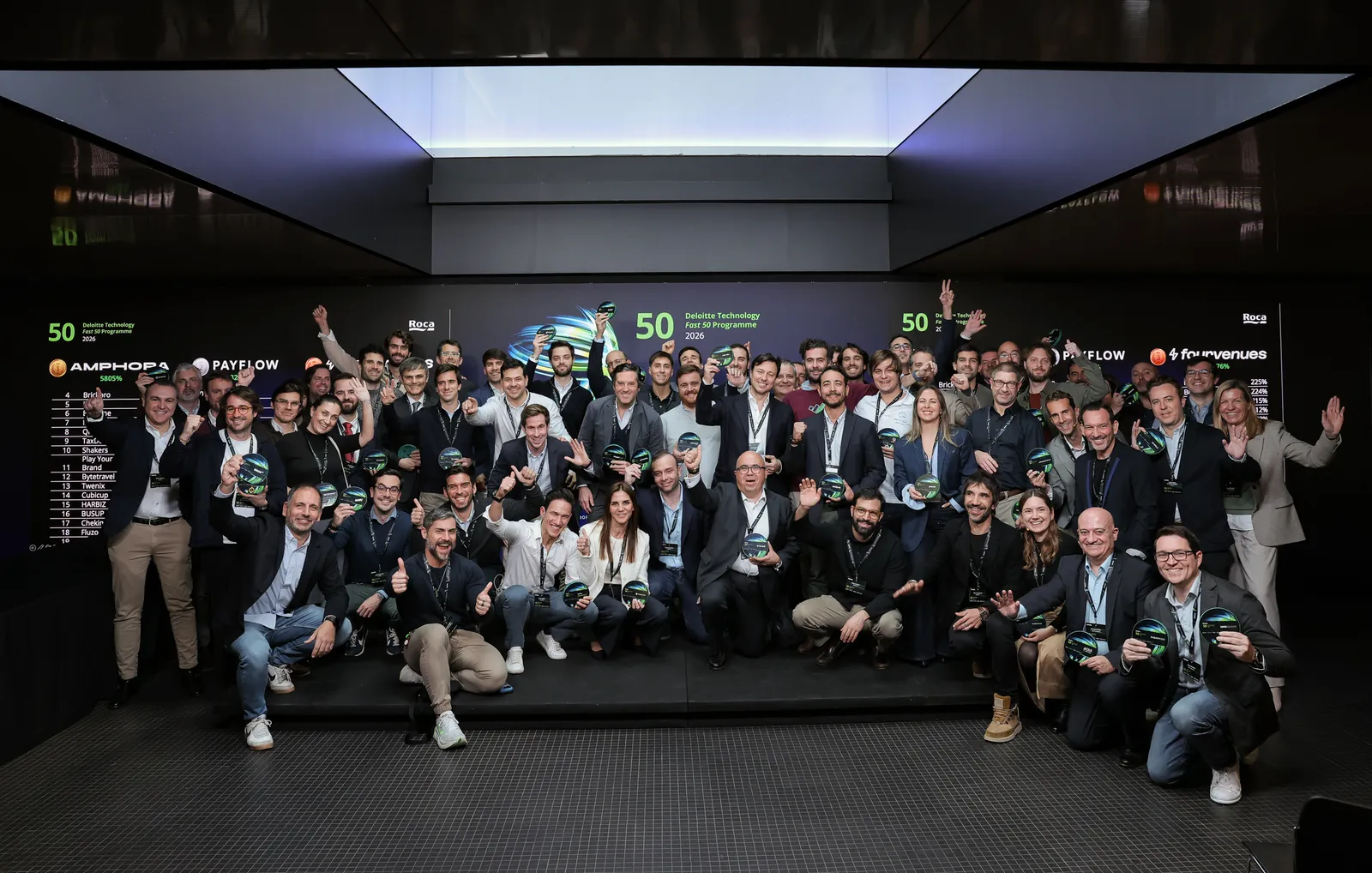
Deloitte has announced the results of the latest edition of the “Deloitte Technology Fast 50 Programme,” the prestigious ranking that identifies the 50 most scalable technology com
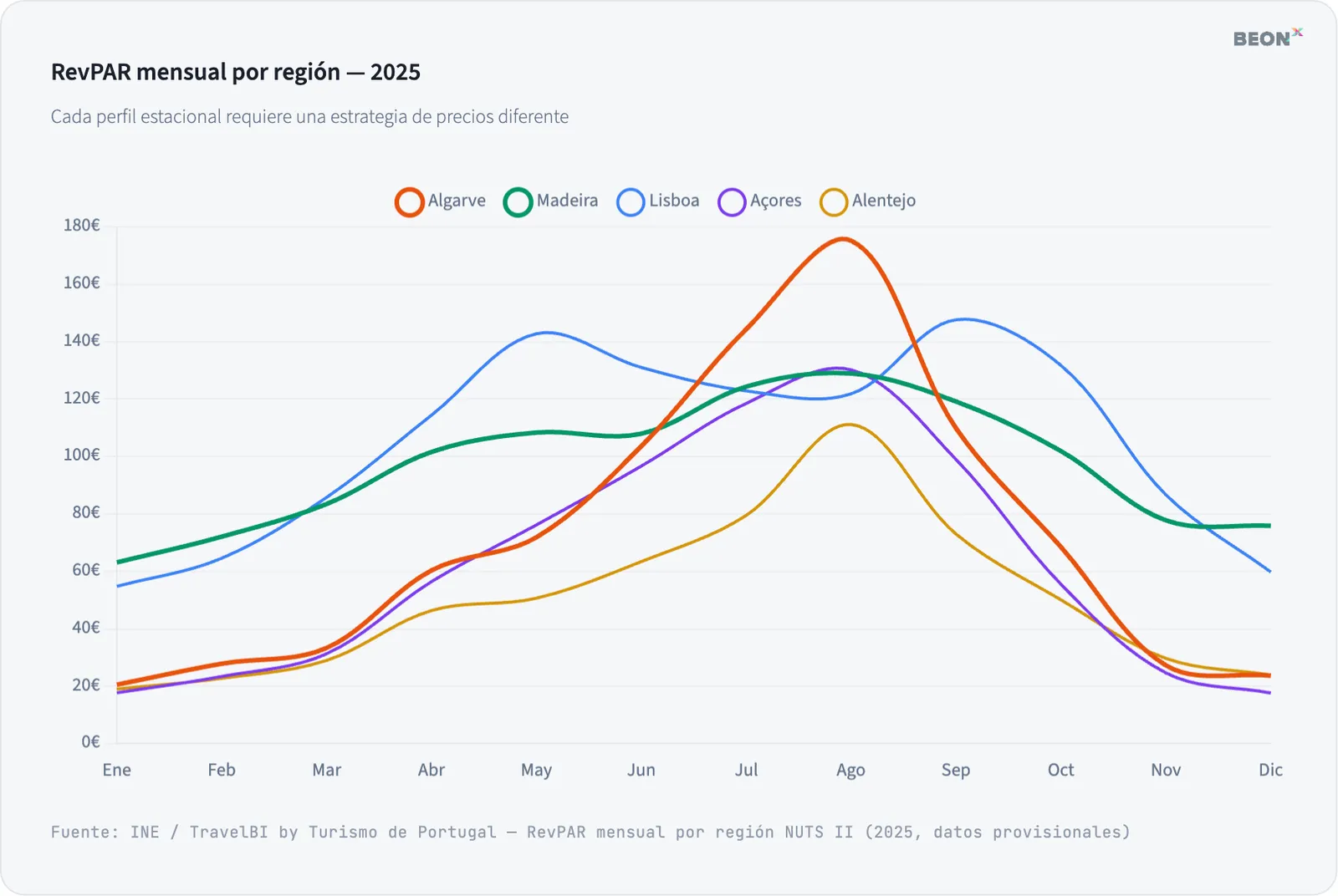
Growth that is losing momentum The hotel market in Portugal continues to break records year after year, but the data reveals a more nuanced reality, a RevPAR of €72.38, growth of +
Concept Hotel Group boosts revenue performance with BEONx through automation, Smart Range, and data-driven decision-making.

From intuition to intelligence: how Kora Living achieved 20% RevPAR growth and built a smarter, data-driven revenue strategy with BEONx.

Colombia’s hotel industry is evolving fast. Learn how to anticipate demand, use AI to optimize pricing, and compete on value rather than price. A vision of the future of revenue management from BEONx, Lighthouse, and CloudBeds.

On September 15–16, 2025, BEONx participated in HSMAday 2025, held at the Maritim Hotel in Cologne. The event brought together over 500 professionals from the hospitality sector to

BEONx empowered Kali Hoteles team to move from reactive to proactive pricing strategies, detect market shifts early, and implement optimal pricing by room type—improving not just profitability but also internal collaboration and confidence. %

Redefine your pricing strategy with SmartRange by BEONx – the AI-powered model that stabilises rates, minimises volatility and boosts profitability beyond the compset.