
BEONx launches BEONx Spark, the first agentic RMS on the market
With BEONx Spark, hoteliers set the strategy and AI agents execute it across all their hotels. 24/7. Beyond RevPAR. Explaining every decision.


BEONx · Market trends · Tourism sector
Growth that is losing momentum The hotel market in Portugal continues to break records year after year, but the data reveals a more nuanced reality, a RevPAR of €72.38, growth of +

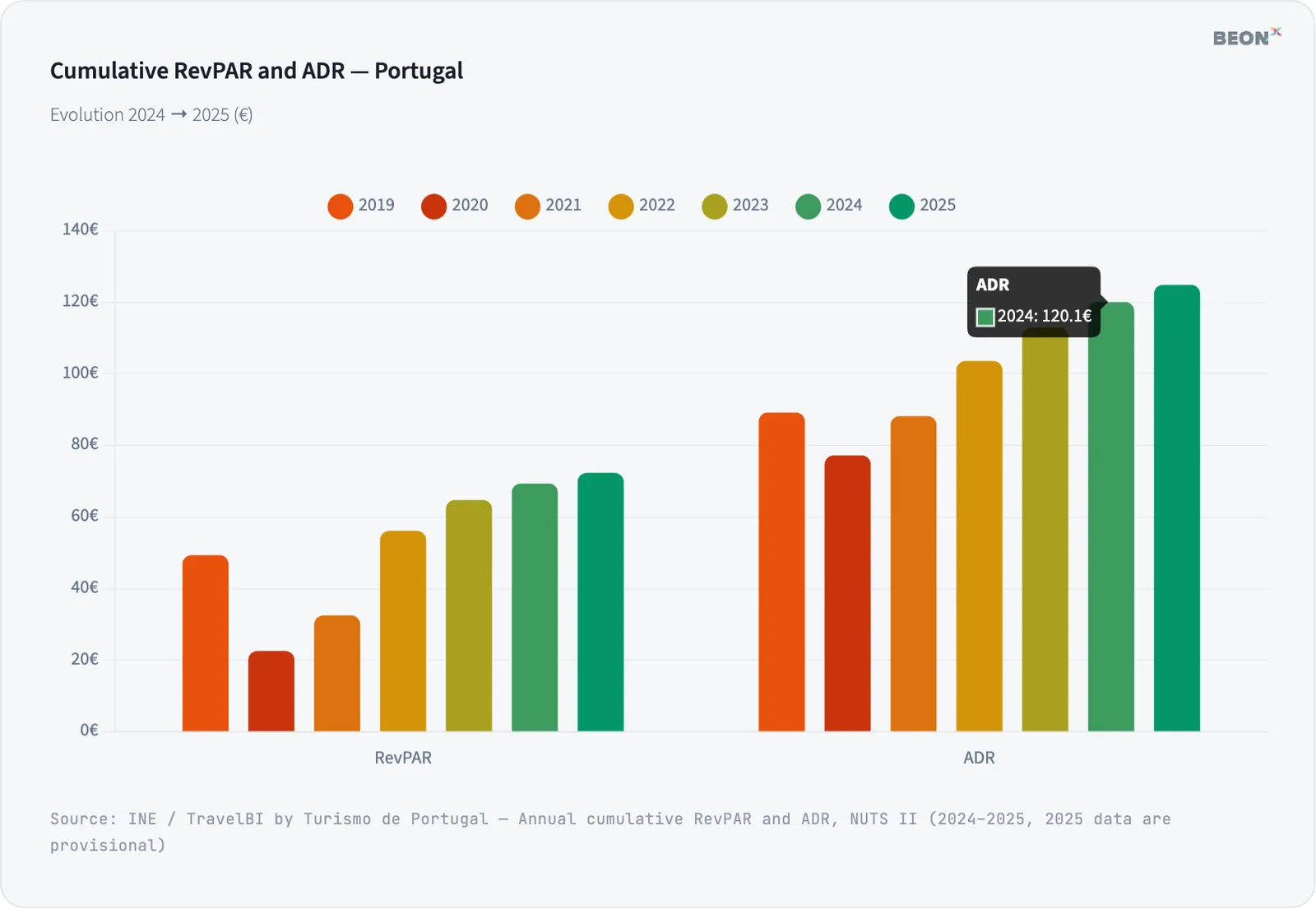
The hotel market in Portugal continues to break records year after year, but the data reveals a more nuanced reality, a RevPAR of €72.38, growth of +4.3% compared to 2024, and tourism revenues exceeding €27 billion, at first glance paint an optimistic picture for the Portuguese hotel market, however, a closer look at the figures reveals a more complex context.
The first sign of change is in the trend, in 2025, RevPAR in Portugal increased by +4.3% compared to the previous year, while ADR grew by +4.0%, these are positive figures, but they show a slowdown compared to the strong post-pandemic momentum, we are not talking about a crisis, as results remain solid, but a market that is beginning to show signs of greater resistance and demands more strategic and precise management.
The natural question is: Why is growth slowing? To answer this, it is necessary to analyze RevPAR and ADR separately.
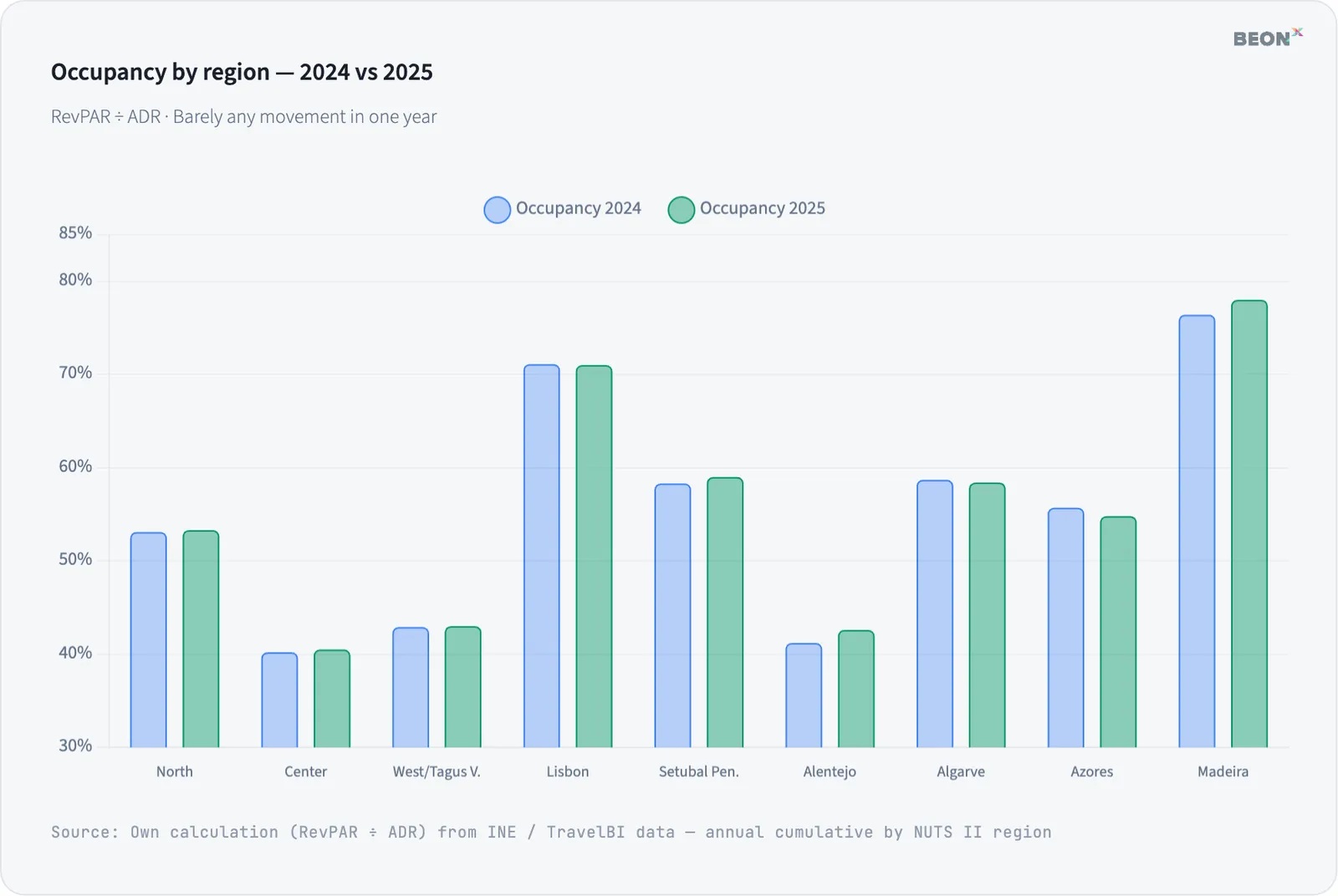
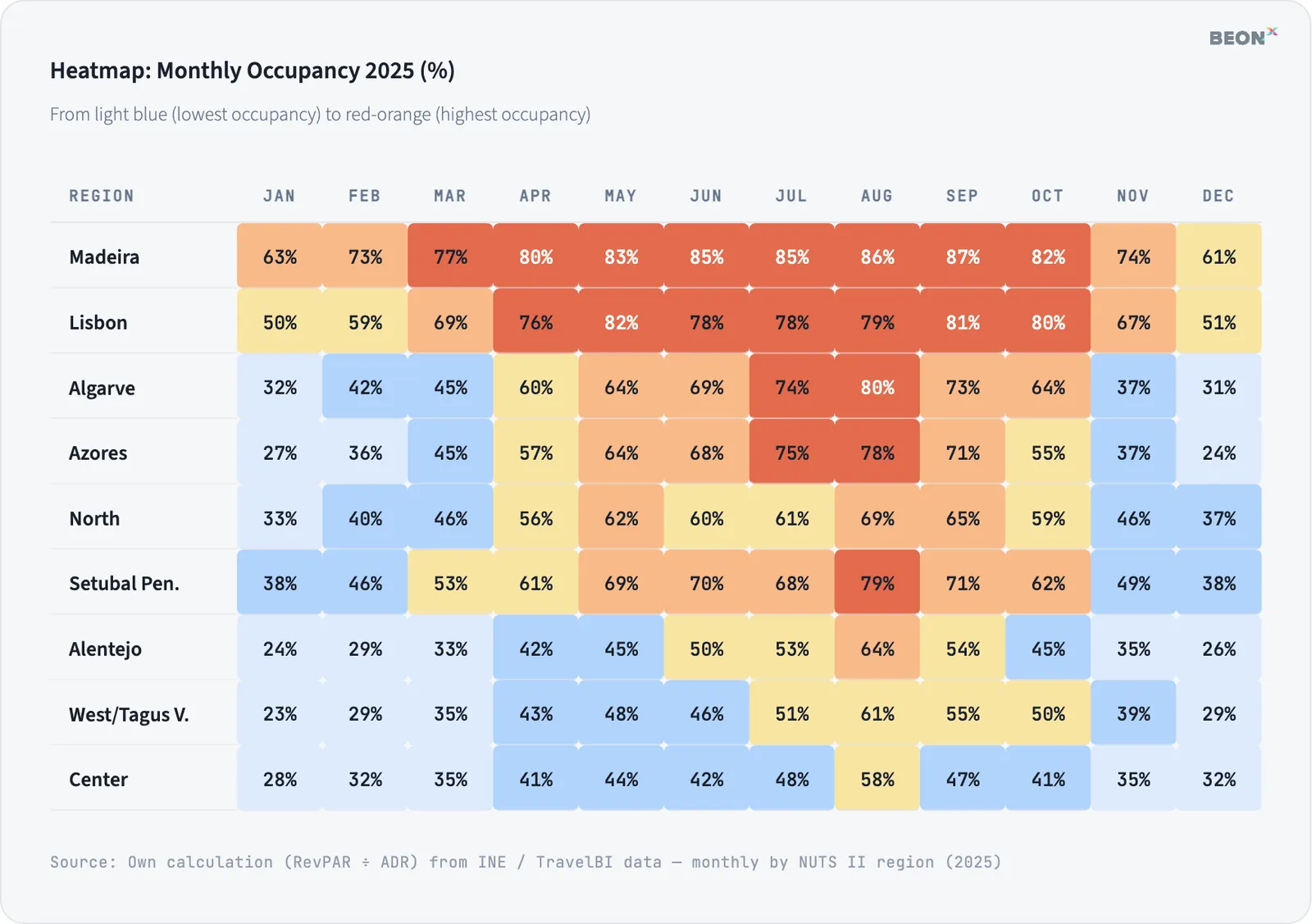
The answer is clear, over the past year, occupancy has barely changed, from 57.8% to 57.9%, this means that almost all of the RevPAR growth is explained exclusively by rate increases, hotels are selling the same number of rooms as before, they are simply charging more for them.
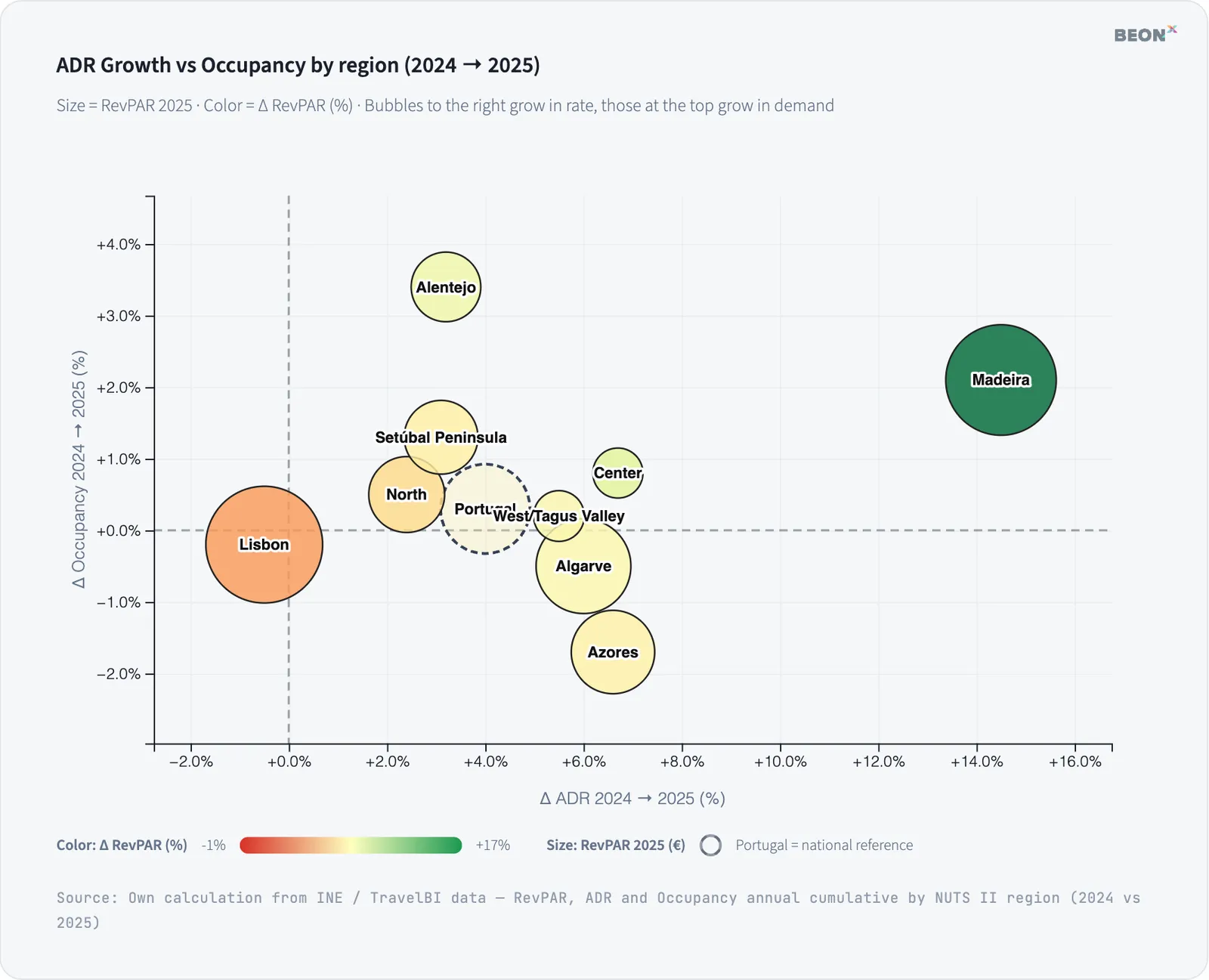
It’s a model that works, until it doesn’t, and the data shows that in one particular region, this strategy is no longer effective.
Lisbon is the mirror in which the rest of the regions will see themselves in a few years, and the proof that future growth will not come from blindly raising prices, but from managing when, to whom, and at what rate each room is sold.
When occupancy reaches its peak, the only remaining room for growth is to optimize rates on the days of highest demand.
Talking about Portugal as a single market is a mistake, if the regional data reveals anything, it is that the national average represents no one, the RevPAR growth ranking between 2024 and 2025 defies all expectations, the fastest-growing destinations are not Lisbon or the North, but precisely the regions that many consider “secondary.”
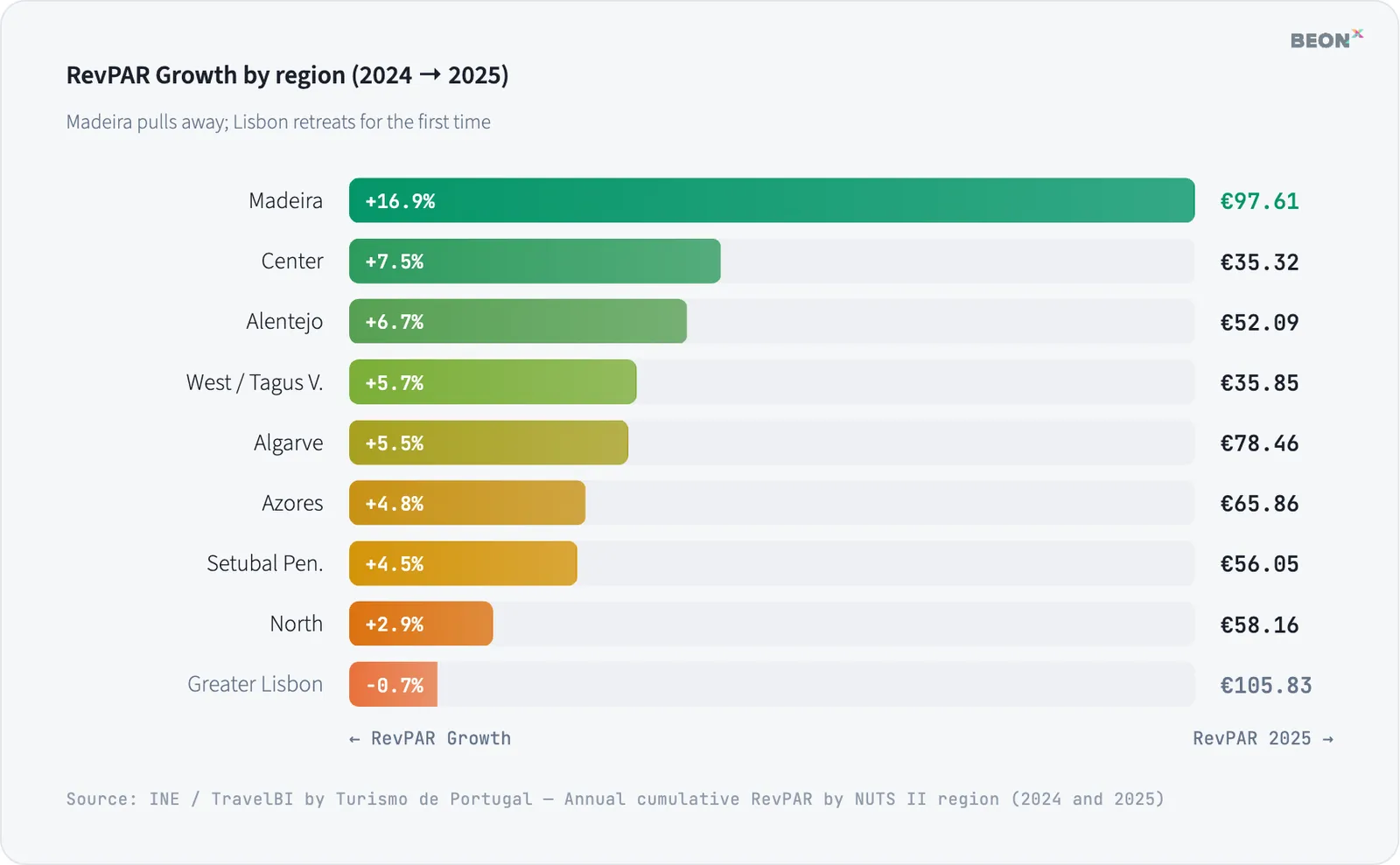
Madeira leads with growth of +16.9%, followed by Centro (+7.5%) and Alentejo (+6.7%), meanwhile, Greater Lisbon, the destination with the highest absolute RevPAR, is the only region in decline at −0.7%, perhaps the most revealing figure is this, a hotel in Madeira now generates a RevPAR of €97.61, just 8% below Greater Lisbon (€105.83), which has rates 19% higher, how is this achieved, not through spectacular peaks, but through something far more valuable, consistency throughout the year.
This brings us to the factor that truly divides the Portuguese market into two worlds, seasonality.
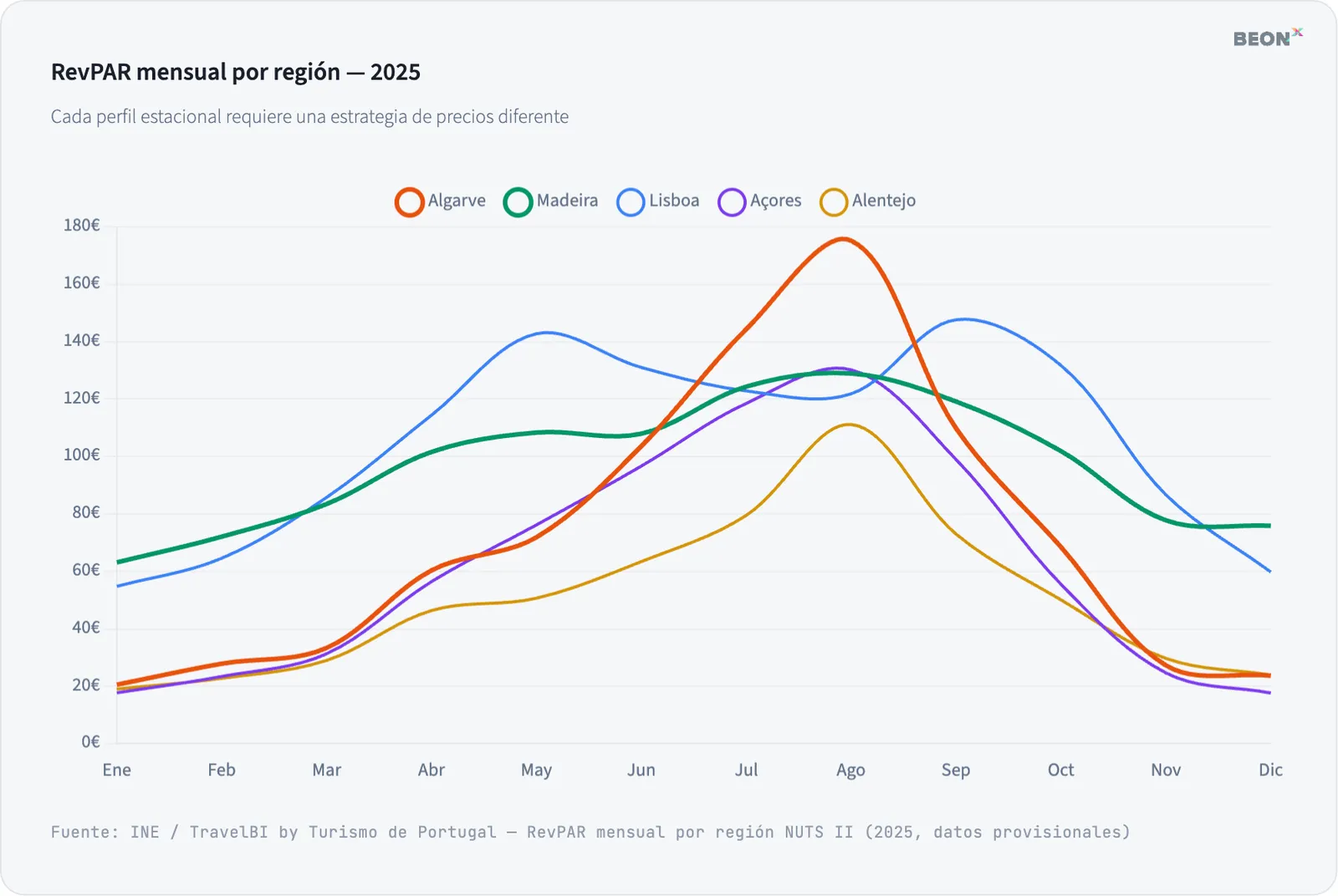
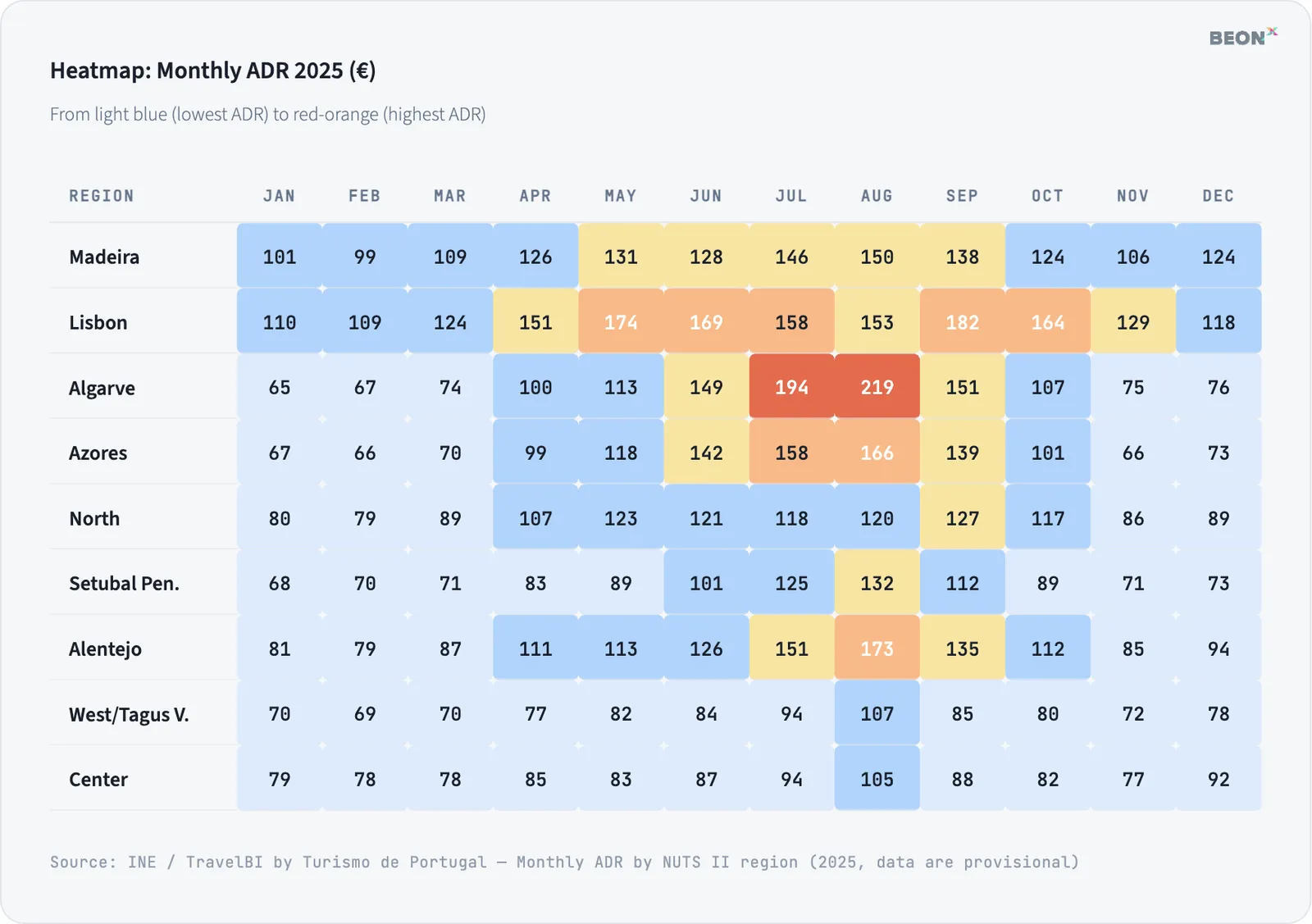
Portugal’s seasonality rate fell to 36.6% in 2024, the lowest since 2013, a positive figure in official reports, however, that national average is a mirage that hides extreme realities, in the Algarve, a hotel generates 8.5 times more revenue in August than in January, while in Madeira, that difference is only 2 times.
It is not a matter of two regions with nuances, but of business models that are radically different and require completely different pricing strategies.
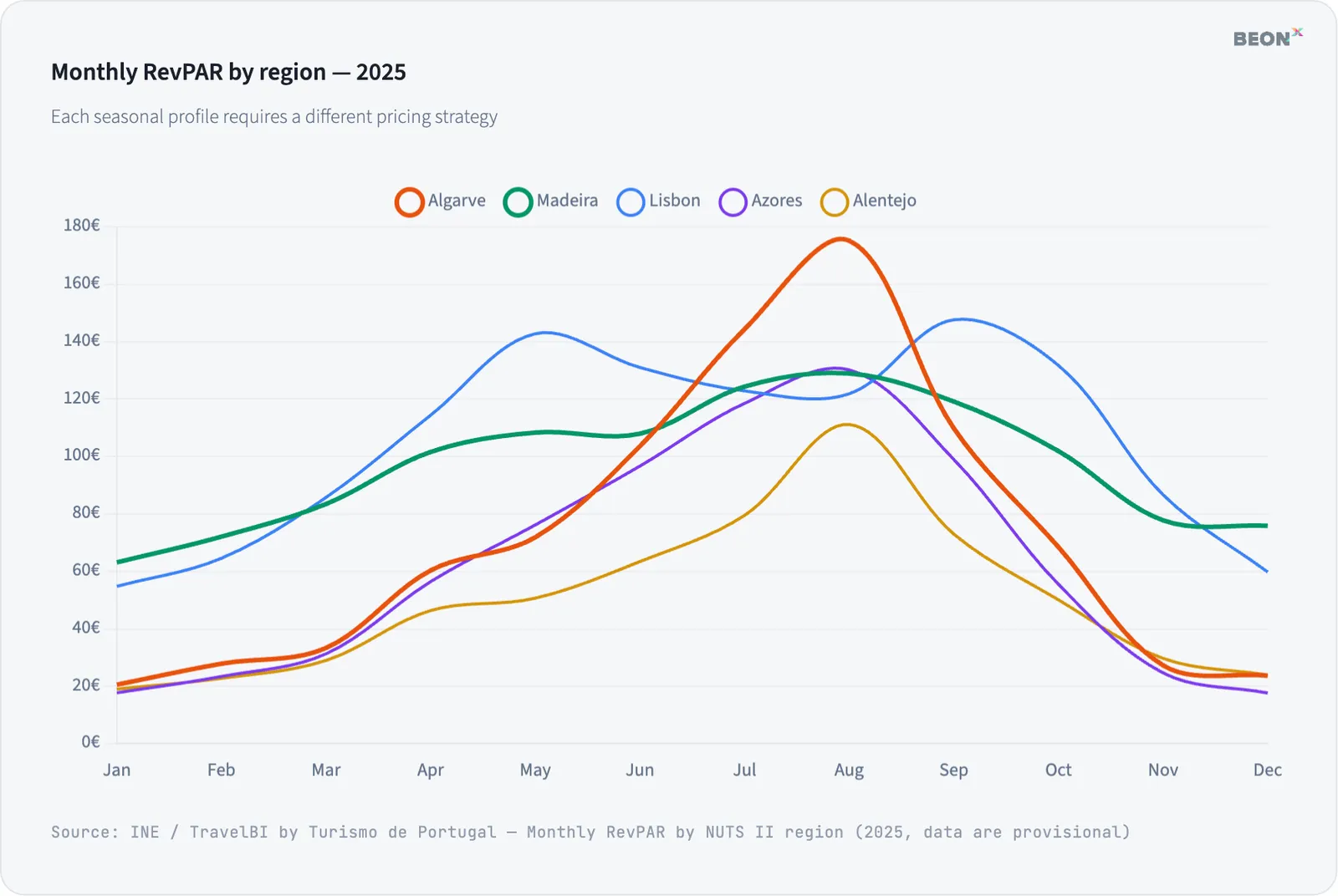
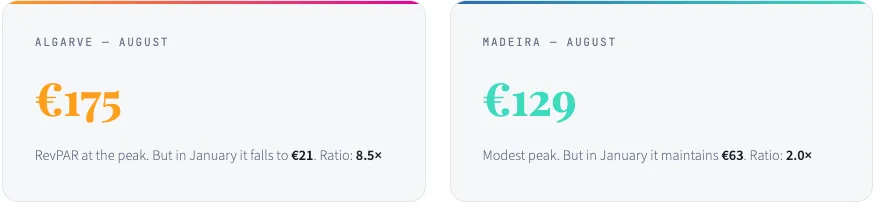
It is worth pausing on this comparison, in the slowest month of the year, a hotel in Madeira generates a RevPAR of €63, while one in the Algarve earns €21, three times less, the Algarve enjoys a spectacular summer, but Madeira wins over the full year with consistency, month after January, month after February, revenues accumulate while seasonal competitors barely cover costs.
January in Madeira generates three times more RevPAR than January in the Algarve, consistency outperforms the peak.
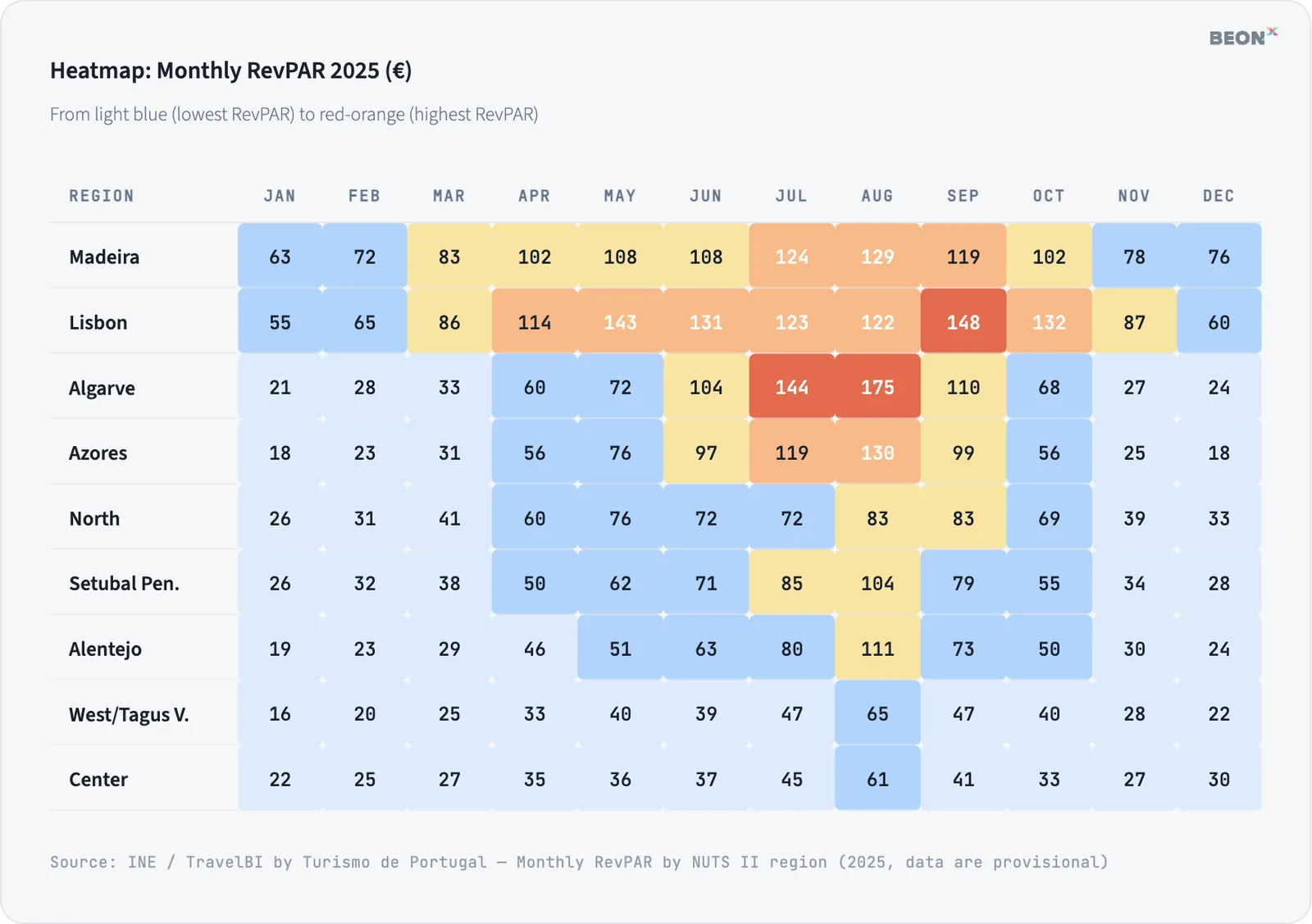
The monthly RevPAR heat map makes this reality clear at a glance, the regions with the most uniform cells are the ones that achieve the best annual results.
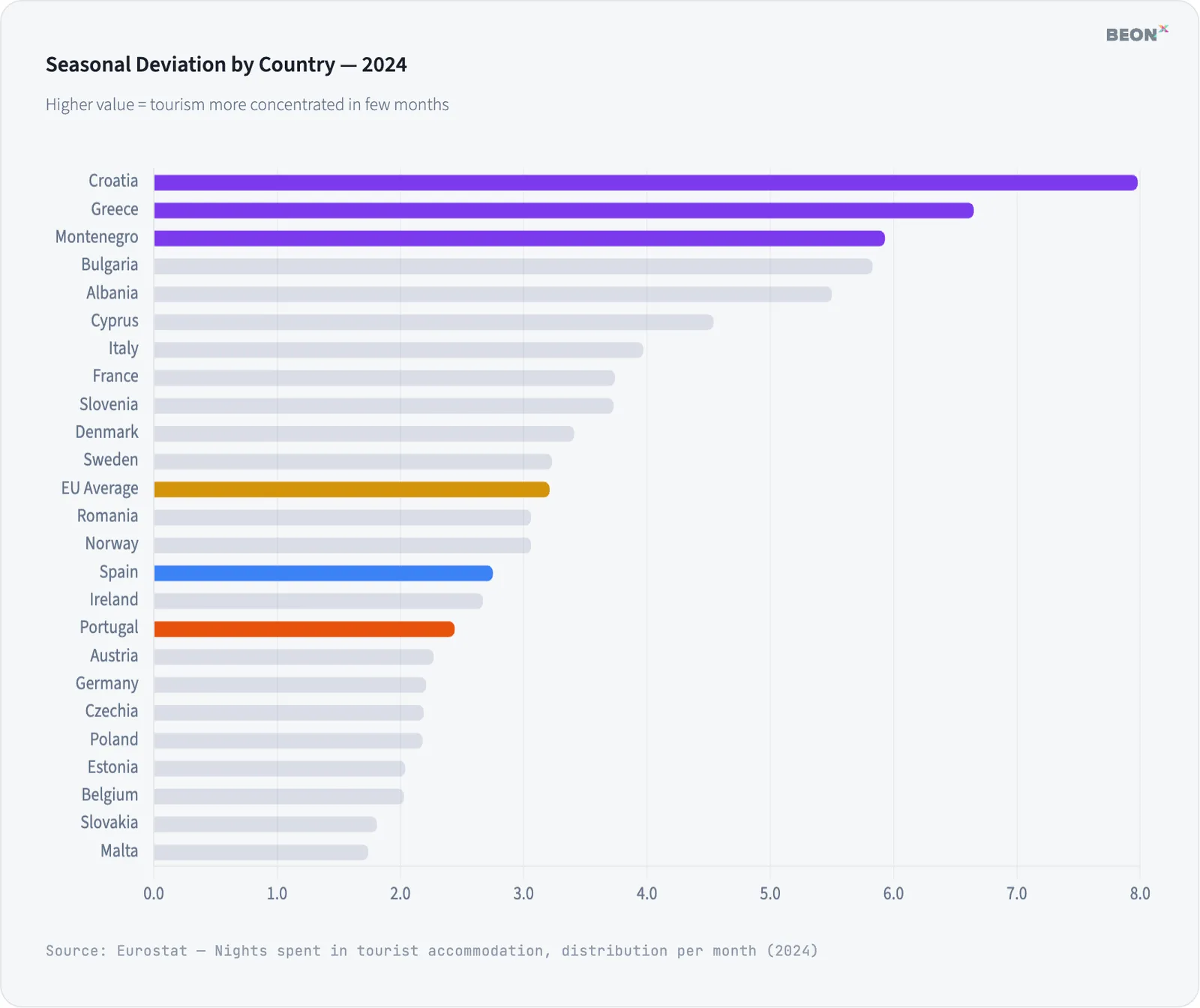
Now, how does Portugal compare with the rest of Europe, it is tempting to think that seasonality is a problem unique to Portugal, it is not, but the way Portugal experiences it internally is unique. Eurostat measures the concentration of tourism in the summer months using a seasonal deviation index, Portugal scores 2.44, better than the EU average of 3.21 and far below the most extreme Mediterranean destinations such as Croatia (7.98) or Greece (6.65), in the European ranking, Portugal comes out looking strong.
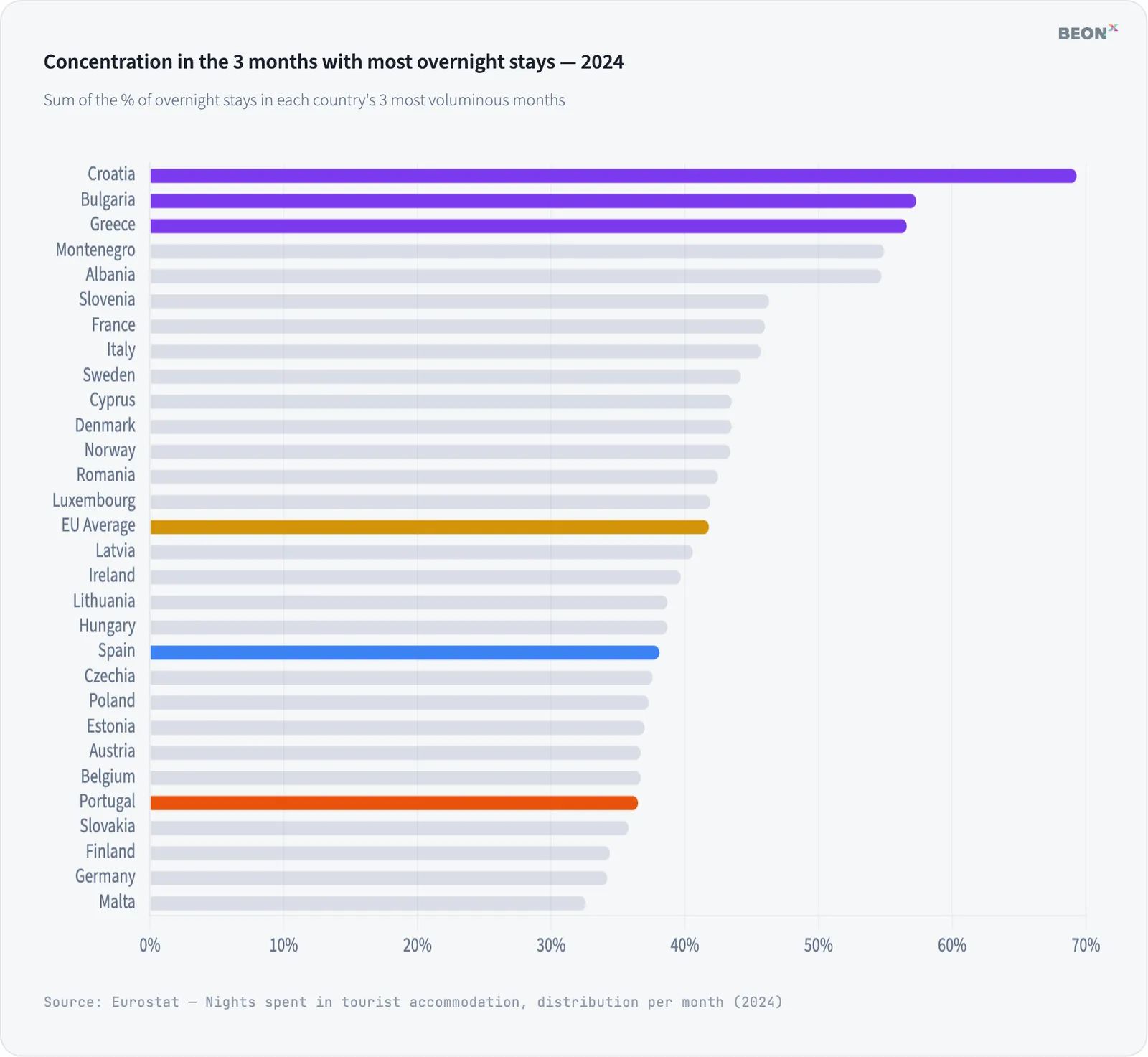
Another way to measure seasonality is to calculate what percentage of total annual overnight stays is concentrated in just three months, in a perfectly even distribution, three months would account for 25% of the year.
In Croatia, the three strongest months account for 69.3% of all overnight stays, more than two-thirds of the annual business compressed into a single quarter, Portugal, at 36.5%, sits comfortably below the European average of 41.8% and far from the most extreme Mediterranean destinations, however, as we have already seen, that national figure hides very different regional realities.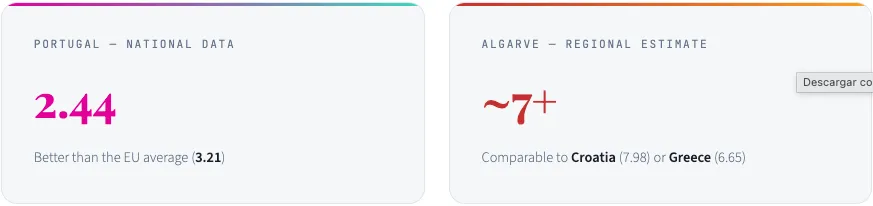
The problem is that the 2.44 figure is an average that does not reflect the experience of any real hotelier, a hotel in the Algarve does not operate in a market with seasonality of 2.44, it operates in a reality comparable to Croatia, while a hotel in Madeira experiences a reality closer to Germany (2.21) or Estonia (2.04), within the same country, two completely different tourism models coexist.
Recognizing this is not just an academic exercise, as it has direct implications for pricing management, a hotel with an extremely seasonal profile needs to maximize every high-season night as if it were the last, while a hotel with stable demand can optimize very differently, focusing on the mix of segments and the booking pace throughout the year, on top of this, there is one more piece of data that completes the puzzle and should give any hotelier still setting rates by “high season / mid season / low season” pause for thought.
Analyzing which months saw the highest RevPAR growth nationally between 2024 and 2025, the pattern is revealing, it is not August, the traditional peak, that shows the most growth, but April, with +10.9%, followed by January (+10.4%) and July (+6.5%), meanwhile, August, the month when every Portuguese hotel raises rates to the maximum, grows by just +3.3%, two months even decline, March (−2.0%) and November (−2.2%).
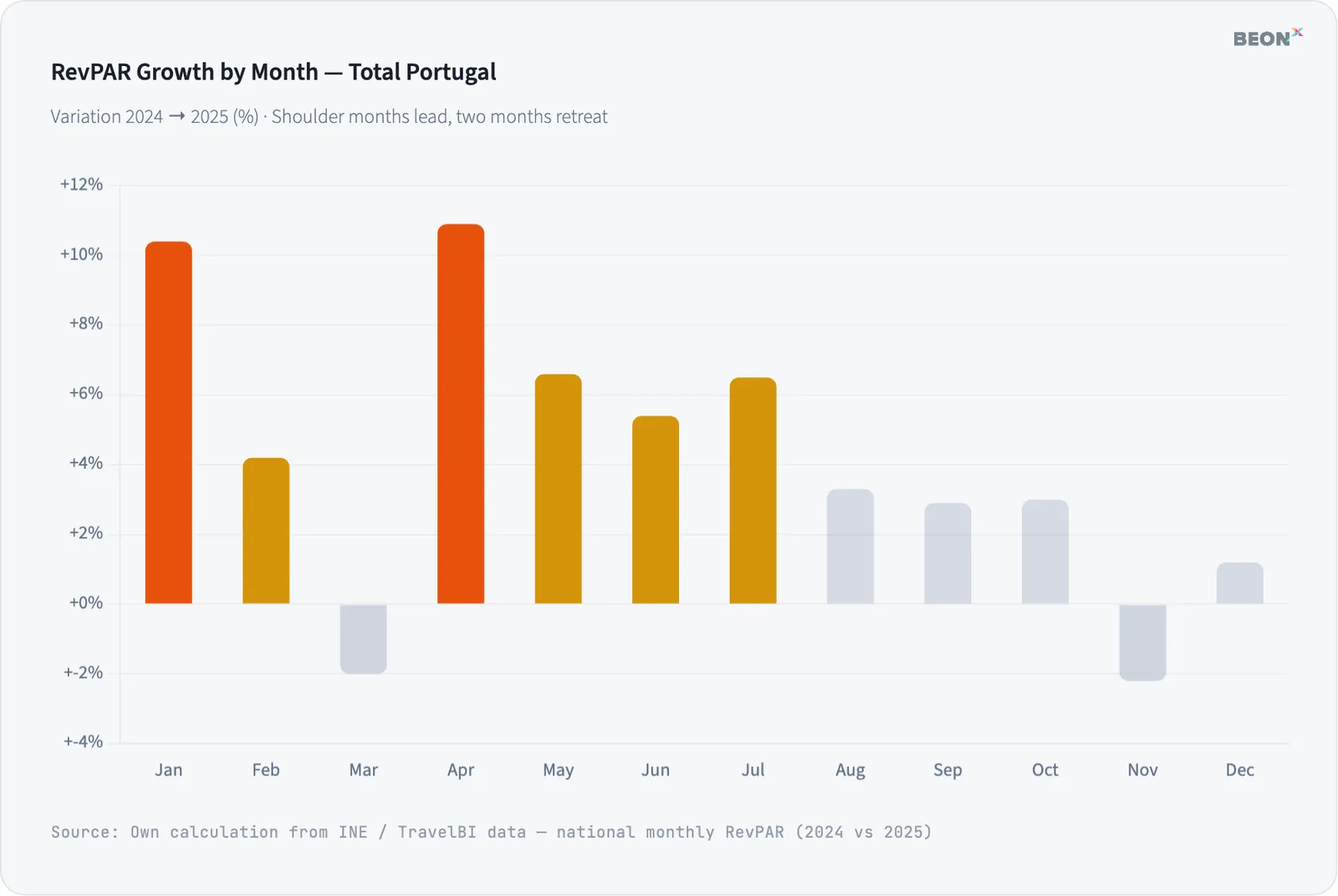
Demand is being redistributed, travelers are discovering April and January for their lower crowds and more authentic experiences, and hotels that maintain flat “mid-season” rates during these months are leaving money on the table, a hotel that charged its fixed mid-season rate in April 2024 and continues to charge the same today is selling at last year’s prices in a market that has grown by almost 11%.
April grew by +10.9% in just one year, how many hotels actually adjusted their “mid-season” rates to capture it?
This redistribution of demand is, paradoxically, the best possible news for the sector, it means there is more value to capture without needing more tourists, but only those with the tools to detect these shifts in demand in real time and adjust rates before the opportunity passes will actually capture it.
If anything, the data from this analysis shows that seasonality in the Portuguese market is not a sentence, it is a map of opportunities, Portugal concentrates 36.5% of its overnight stays in just three months, better than the European average, but with huge internal differences, the Algarve compresses two-thirds of its business into the summer, while Madeira maintains stable revenues throughout the year, these are two realities that demand radically different strategies.
The most revealing insight is not at the extremes, but in the margins, April grew by +10.9% year-on-year, while January increased by +10.4%, meanwhile, August, the month when all hotels focus their rate efforts, rose by just +3.3%, demand is shifting toward the months surrounding high season, the shoulder periods that many hotels still treat as mid-season with flat rates.
Value is not found only in the peak, but in the months with lower demand.
Capturing that value requires something a static rate table cannot provide, the ability to detect when demand is accelerating before it shows in occupancy and adjust prices accordingly, a hotel that continues to charge its fixed “mid-season” rate in April is selling at last year’s prices in a market that has grown by nearly 11%.
The Portuguese market will continue to grow, but growth will no longer come from raising prices in August or filling more rooms in Lisbon, opportunities will be captured by those who understand that every night has a different value and have the tools to seize it, that is the difference between managing a hotel and managing its profitability.
If you’re not doing it yet, at BEONx we can help, shall we talk?
Sources: INE / TravelBI by Turismo de Portugal — RevPAR and ADR by NUTS II region (2024–2025, 2025 provisional data), Banco de Portugal — Tourism revenues 2024, INE — Estatísticas do Turismo 2024 (tourist arrivals), Eurostat — Nights spent in tourist accommodation, monthly distribution (2024). With BEONx Spark, hoteliers set the strategy and AI agents execute it across all their hotels. 24/7. Beyond RevPAR. Explaining every decision.

Deloitte has announced the results of the latest edition of the “Deloitte Technology Fast 50 Programme,” the prestigious ranking that identifies the 50 most scalable technology com

Colombia’s hotel industry is evolving fast. Learn how to anticipate demand, use AI to optimize pricing, and compete on value rather than price. A vision of the future of revenue management from BEONx, Lighthouse, and CloudBeds.
Speak with one of our dedicated hotel experts and get started on your journey to sustainable profitability.
Other Articles

Learn how Lungarno Collection increased ADR by 5-10% and automated pricing strategies using BEONx AI-driven Revenue Management System.
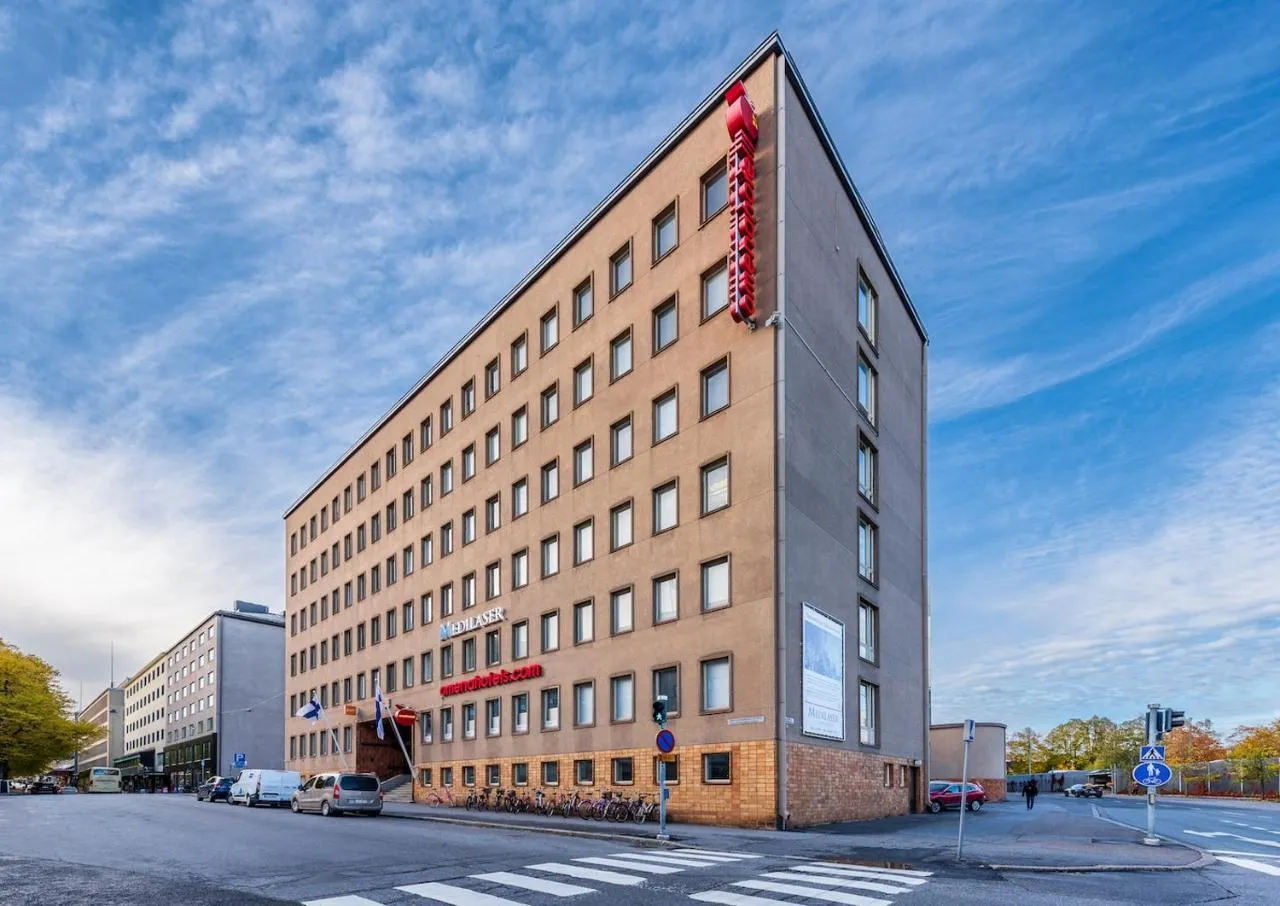
How Omena Hotels strengthened profitability and improved RevPAR through automation, forecasting and real-time pricing intelligence with BEONx.
Deloitte has announced the results of the latest edition of the “Deloitte Technology Fast 50 Programme,” the prestigious ranking that identifies the 50 most scalable technology com
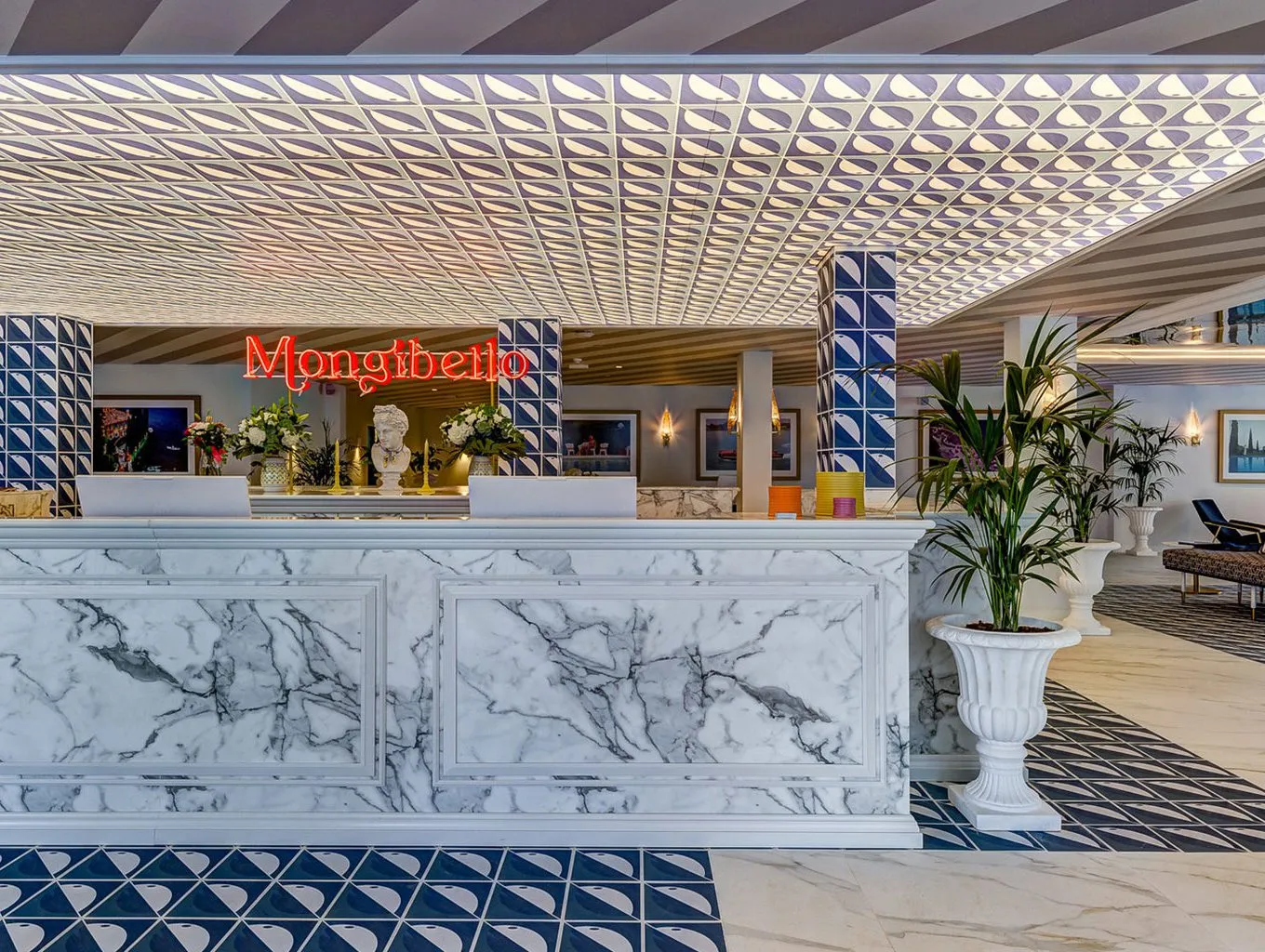
Concept Hotel Group boosts revenue performance with BEONx through automation, Smart Range, and data-driven decision-making.

From intuition to intelligence: how Kora Living achieved 20% RevPAR growth and built a smarter, data-driven revenue strategy with BEONx.
Colombia’s hotel industry is evolving fast. Learn how to anticipate demand, use AI to optimize pricing, and compete on value rather than price. A vision of the future of revenue management from BEONx, Lighthouse, and CloudBeds.

On September 15–16, 2025, BEONx participated in HSMAday 2025, held at the Maritim Hotel in Cologne. The event brought together over 500 professionals from the hospitality sector to

BEONx empowered Kali Hoteles team to move from reactive to proactive pricing strategies, detect market shifts early, and implement optimal pricing by room type—improving not just profitability but also internal collaboration and confidence. %

Redefine your pricing strategy with SmartRange by BEONx – the AI-powered model that stabilises rates, minimises volatility and boosts profitability beyond the compset.