
Stop The Hype, Start The Action: Real AI for Real Revenue Management
Discover how artificial intelligence is transforming hotel revenue management, without falling into unrealistic expectations. Data and strategies based on industry reports.


Forecasting · Organización interna
As the hospitality industry becomes increasingly competitive, hotels must continuously evaluate their business performance and adapt to changing market conditions. One effective to

As the hospitality industry becomes increasingly competitive, hotels must continuously evaluate their business performance and adapt to changing market conditions. One effective tool for measuring and improving hotel performance is your quarterly business review (QBR).
In this post, we will explain what a quarterly business review is and which components you need to include in yours to ensure maximum growth and profitability.

A quarterly business review (QBR) is a meeting held by a hotel’s management team every quarter to review the hotel’s performance and define areas for improvement for the next quarter.
During a quarterly business review, the team reviews key performance metrics and data to determine strengths and weaknesses and develop strategies for improvement in line with the hotel’s annual budget. Common metrics that are reviewed during this session include occupancy rates, average daily rate (ADR), revenue per available room (RevPAR), and any other key performance indicators relating to revenue management, sales and marketing, operations, guest experience, and financial performance.
The quarterly business review is also an opportunity to discuss any challenges or opportunities that have arisen during the previous quarter so that the team can develop tactical and strategic revenue management plans to address them.
A successful quarterly business review should include key components such as a review of revenue and occupancy performance, an analysis of market trends and competition, an evaluation of pricing and distribution strategies, an overview of guest satisfaction metrics, and a discussion of upcoming events and initiatives.
Let’s take a look now at these key components in a bit more detail. That way, you will have access to all the data you need to ensure maximum revenue and profitability for your hotel.
The first component of a successful quarterly business review is data analysis. Make sure you collect and analyse revenue and occupancy data from a variety of sources. This should include financial reports such as income statements, balance sheets, and cash flow statements. Your analysis should also include revenue metrics including daily occupancy rates, average daily rate (ADR), and revenue per available room (RevPAR). Also, make sure your analysis identifies any trends, strengths, and weaknesses that can inform and guide your future revenue management strategies.
What progress have you made in the last quarter in terms of revenue and occupancy? Have you met the revenue management objectives that you set at your last quarterly business review? If not, which challenges prevented you from meeting your goals?
Don’t forget to include market trends and competitor performance in your quarterly business review. This data is crucial for staying competitive and offering fair and consistent prices.
You can collect a lot of valuable data from industry reports, market research studies, and online resources such as TripAdvisor, Expedia, and Booking.com. A solid and reliable revenue management platform can also be a great data source for this. Make sure you collect both historical and current data to identify trends and changes over time.
Once you’ve collected your data, you need to analyse it. How is your hotel performing relative to industry benchmarks and market expectations? Have there been any notable changes in guest behaviour, market demand, or industry trends? Are you using the right technology to keep track of all this information on a daily basis?
The next important element of a quarterly business review is reviewing your pricing and distribution strategies. Reviewing this data will help you optimise your rates and overall revenue management strategies so that you can ensure maximum profitability for your hotel.
Start by collecting all your pricing and distribution data. This includes your room rates, distribution mix, and revenue by channel. Again, make sure you collect both current and historical data so that you get a fuller analysis and can better interpret any trends or changes since the last quarter.
How have your pricing strategies impacted revenue growth over the last quarter? How much revenue have you generated from your various distribution channels compared to your direct bookings? What about any discounts or offers that you might have promoted through your website or loyalty programs? What should you focus on during the next quarter to enhance your pricing and direct booking strategies?
Guest satisfaction is an important element of effective revenue management. After all, the happier your guests are, the more likely they are to become loyal, returning customers. Plus, satisfied guests are far more likely to leave you positive online reviews that boost your hotel’s reputation.
Make sure you collect and review all your guest satisfaction metrics during your quarterly business review so that you can understand the impact of your guest experience on total revenue growth. Common metrics for this include overall guest satisfaction, likelihood to recommend, satisfaction with specific aspects of the hotel such as cleanliness or staff friendliness, and your Net Promoter Score (NPS). You should be collecting all this data on a regular basis through guest surveys, online reviews, and social media monitoring.
Are there any patterns or trends? How have any guest satisfaction improvement initiatives impacted revenue and growth since your last quarterly business review? Are you meeting guest expectations? Are you aligning with industry benchmarks? Which areas of your guest experience can you enhance over the next quarter?
Upcoming events can have a significant impact on hotel revenue. Hotels that are able to anticipate and plan for upcoming events and initiatives can take advantage of increased demand and generate higher revenue.
Are there any upcoming events such as conferences, trade shows, or festivals over the next quarter? How will you adapt your pricing strategies to capitalise on this increased demand? How can you promote your ancillary services in the run-up to any upcoming events? Are there any specific needs and expectations that event attendees might have?
Make sure you define actionable recommendations based on data-driven insights to improve future performance. These goals should be specific, realistic, time-bound, measurable, and aligned with your overall business strategy.
What are your revenue and performance goals for the next quarter? How will you achieve them? Which specific strategies can you implement to overcome any challenges that you might have faced over the last quarter?
Finally, it’s vital that you use the right technology to access all the data you need to measure and monitor your progress and effectively prepare for your next quarterly business review. By leveraging technology, such as Revenue Management software, you can streamline all the aforementioned data collection and analysis processes, allowing for more accurate and comprehensive reviews. Ultimately, a successful quarterly business review based on solid and reliable data like this can help you identify key areas for improvement and make data-driven decisions that drive revenue and profitability.
Discover how artificial intelligence is transforming hotel revenue management, without falling into unrealistic expectations. Data and strategies based on industry reports.

What is a Hotel Pricing Strategy? A hotel pricing strategy is a comprehensive plan that a hotel develops to determine the ideal prices for its rooms and services. This pricing stra

BEONx: Your Partner in Real-Time Revenue Maximisation
Speak with one of our dedicated hotel experts and get started on your journey to sustainable profitability.
Other Articles

Learn how Lungarno Collection increased ADR by 5-10% and automated pricing strategies using BEONx AI-driven Revenue Management System.

How Omena Hotels strengthened profitability and improved RevPAR through automation, forecasting and real-time pricing intelligence with BEONx.

Deloitte has announced the results of the latest edition of the “Deloitte Technology Fast 50 Programme,” the prestigious ranking that identifies the 50 most scalable technology com
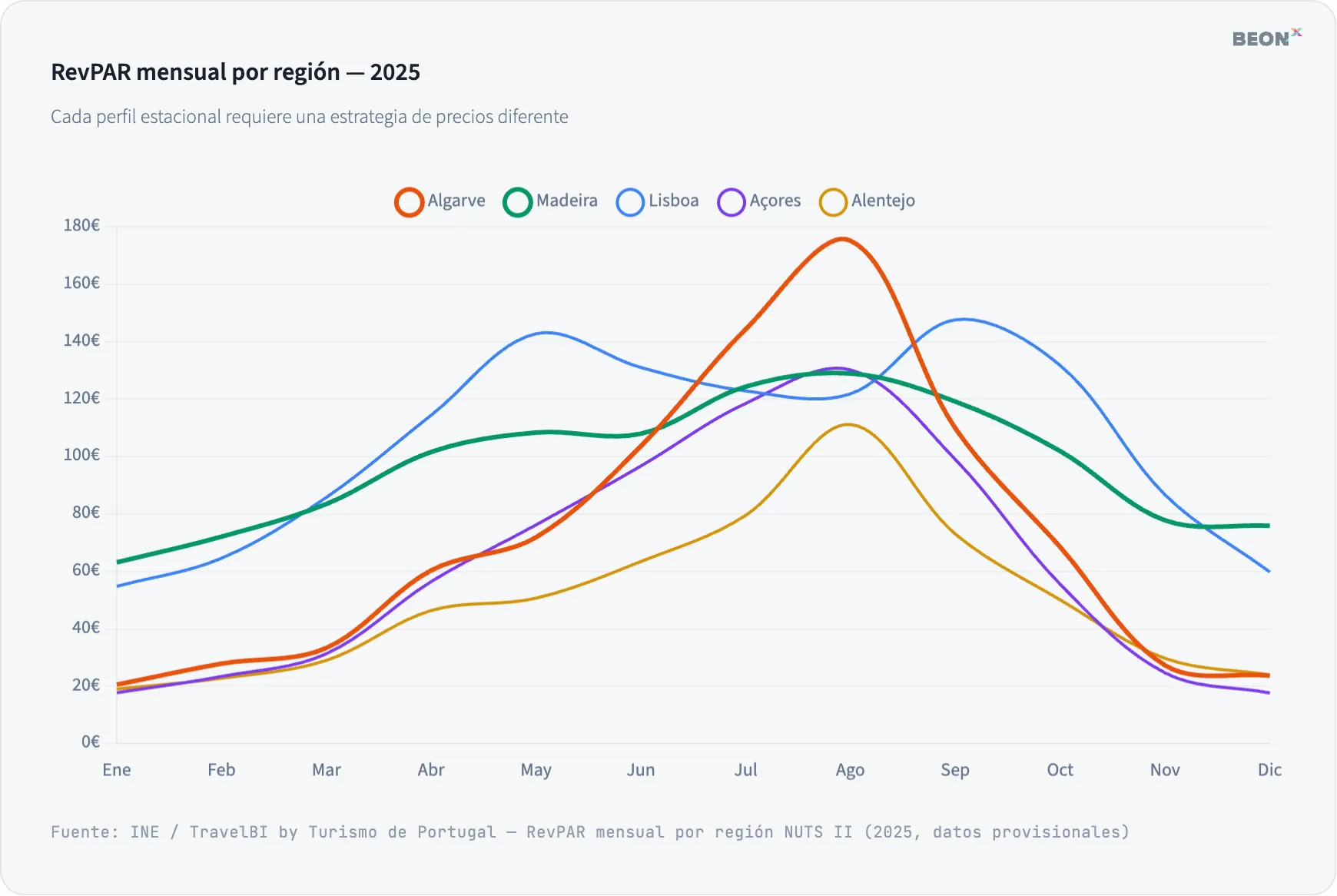
Growth that is losing momentum The hotel market in Portugal continues to break records year after year, but the data reveals a more nuanced reality, a RevPAR of €72.38, growth of +

Concept Hotel Group boosts revenue performance with BEONx through automation, Smart Range, and data-driven decision-making.

From intuition to intelligence: how Kora Living achieved 20% RevPAR growth and built a smarter, data-driven revenue strategy with BEONx.

Colombia’s hotel industry is evolving fast. Learn how to anticipate demand, use AI to optimize pricing, and compete on value rather than price. A vision of the future of revenue management from BEONx, Lighthouse, and CloudBeds.

On September 15–16, 2025, BEONx participated in HSMAday 2025, held at the Maritim Hotel in Cologne. The event brought together over 500 professionals from the hospitality sector to

BEONx empowered Kali Hoteles team to move from reactive to proactive pricing strategies, detect market shifts early, and implement optimal pricing by room type—improving not just profitability but also internal collaboration and confidence. %

Redefine your pricing strategy with SmartRange by BEONx – the AI-powered model that stabilises rates, minimises volatility and boosts profitability beyond the compset.